Munsell charts, including soil color pdf versions, standardize communication about soil hues, values, and chroma—vital for diverse applications like mapping and assessment.
What is a Munsell Color Chart?
Munsell Color Charts represent a standardized system for numerically defining and visually displaying color, originally developed by Professor A.H. Munsell. Specifically, soil color charts, often available as a pdf, organize colors in three dimensions: hue, value (lightness), and chroma (color purity).
These charts aren’t simply color swatches; they provide a consistent, repeatable method for describing soil coloration, crucial for fields like pedology, geology, and environmental science. Digital pdf versions enhance accessibility and ease of use.
Why Use a Munsell Chart for Soil?
Munsell charts offer a standardized language for soil scientists, eliminating ambiguity in color descriptions. Utilizing a Munsell soil color chart, often accessed as a convenient pdf, allows for precise soil characterization, aiding in classification, mapping, and monitoring.
Color provides clues about soil composition, drainage, and organic matter content. A pdf version facilitates field work, enabling quick and accurate color matching, crucial for consistent data collection and reliable analysis.
Understanding Soil Color and its Significance
Soil color, accurately defined using a Munsell chart or pdf guide, reveals crucial information about composition, organic content, and environmental conditions.
Relationship Between Soil Color and Composition
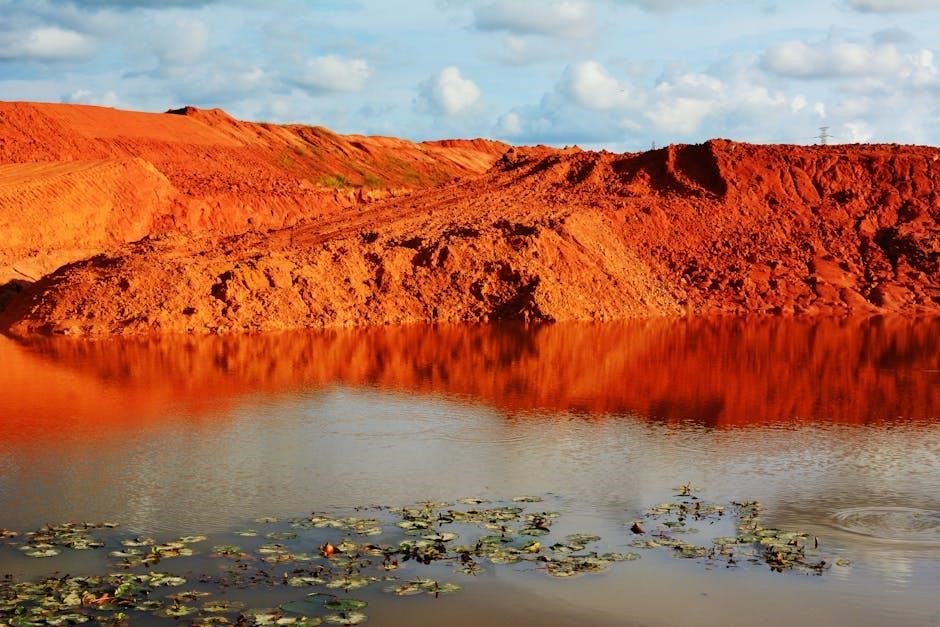
Soil composition profoundly influences color, as observed with Munsell charts and accessible in soil color pdf resources. Iron oxides impart reddish and yellowish hues, while manganese creates darker shades.
Quartz and other minerals contribute to lighter tones. Utilizing a Munsell chart allows for precise color documentation, linking observed hues directly to mineralogical and chemical makeup. This correlation is fundamental for soil scientists, aiding in accurate compositional assessments and interpretations, readily available through digital pdf guides.
Impact of Organic Matter on Soil Color
Organic matter significantly darkens soil, shifting hues towards gray or brown, easily identifiable using a Munsell chart and detailed in soil color pdf guides. Decomposition stages influence the intensity; partially decomposed matter creates darker shades than fully humified material.
Higher organic content generally lowers the value (lightness) and can affect chroma. Accurate color assessment with a Munsell chart provides insights into organic matter levels, crucial for evaluating soil health and fertility, as detailed in accessible pdf resources.
Influence of Drainage and Oxidation on Soil Hue
Drainage profoundly impacts soil hue; poorly drained soils exhibit gray or bluish tones due to reduced oxygen, readily identified using a Munsell chart and illustrated in soil color pdf references. Conversely, well-drained soils display reddish or yellowish hues from iron oxide formation.
Oxidation, linked to drainage, alters iron’s state, influencing color. A Munsell chart helps pinpoint these changes, crucial for understanding soil processes, with detailed explanations available in comprehensive pdf guides for accurate assessment.
The Munsell Soil Color System Explained
Munsell organizes colors by hue, value, and chroma, offering a standardized system—easily referenced in detailed soil color pdf charts—for precise soil description.
Hue: The Dominant Color
Hue represents the dominant soil color – red, yellow, brown, gray, etc. – arranged spectrally on the Munsell chart. These primary hues branch into intermediate mixtures, visually depicted in the soil color pdf guides. Identifying hue is the first step in Munsell notation.
Understanding hue variations, as presented in downloadable pdf versions, is crucial for accurate soil characterization. The chart organizes hues into ten major divisions, each further subdivided for precision.
Value: Lightness or Darkness
Value refers to the lightness or darkness of a soil color, ranging from 0 (perfect black) to 10 (perfect white) on the Munsell chart. This dimension, clearly illustrated in a soil color pdf, indicates the amount of light reflected.
Higher value numbers signify brighter soils, while lower values denote darker shades. Accurate value assessment, aided by pdf chart references, is essential for consistent soil descriptions and interpretations.
Chroma: Color Purity or Saturation
Chroma describes the color purity or saturation, representing the intensity of the dominant hue within a Munsell soil color chart. It ranges from 0 (grayish) to 8 or more (vivid), as detailed in a soil color pdf resource.
Higher chroma values indicate brighter, more saturated colors, while lower values suggest duller, grayish tones. Utilizing a pdf chart aids in precise chroma determination for accurate soil characterization.
Using a Munsell Chart: A Step-by-Step Guide
Munsell chart application involves preparing samples, matching them under daylight, and recording the corresponding notation from a soil color pdf.
Preparing the Soil Sample
Proper sample preparation is crucial for accurate Munsell chart color matching. First, obtain a representative soil sample, ensuring it’s free of debris. Moisten the soil to a consistent, paste-like consistency – referencing a soil color pdf can aid visual comparison.
Smooth the surface, avoiding shadows, and allow it to air dry slightly before color determination. Consistent moisture levels are key for reliable results when using a Munsell color chart or digital pdf version.
Matching Soil Color to the Chart
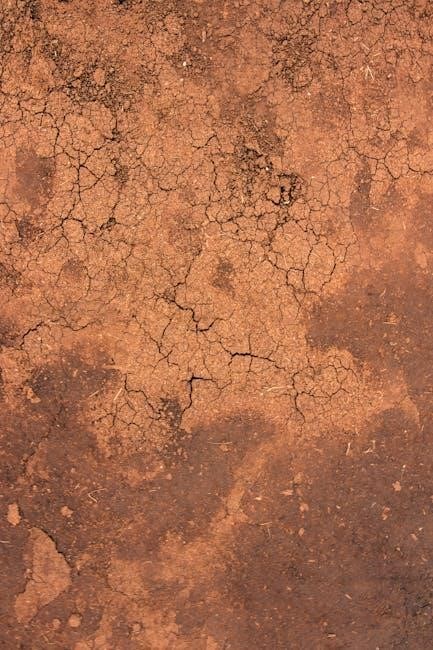
Accurate color matching with a Munsell chart requires careful observation. Compare the moistened soil sample under consistent, natural daylight to the chart’s color chips. Begin by identifying the dominant hue, then refine by value (lightness) and chroma (purity).
Digital soil color pdf charts offer enhanced viewing, but still demand careful comparison. Cross-reference multiple chips to pinpoint the closest match, documenting the Munsell notation.
Recording the Munsell Notation
Munsell notation precisely defines a soil’s color using three components: Hue (10YR), Value (4), and Chroma (6), resulting in 10YR 4/6. This standardized system, easily documented even with soil color pdf charts, ensures consistent communication.
Record the notation accurately in field notes or reports. Digital charts facilitate direct entry, minimizing errors. Proper notation is crucial for reliable soil mapping, classification, and data sharing within the scientific community.
Munsell Chart Variations and Types
Munsell charts come in dry, moist, and Gley versions; soil color pdf downloads offer convenient access to these specialized charts for varied conditions.
Dry Color Charts
Dry Munsell charts represent soil colors as they appear when air-dried, a common initial assessment method. These charts are fundamental for preliminary field observations and provide a baseline for comparison. Accessing a soil color pdf version of dry charts allows for digital referencing and easier record-keeping. They’re crucial for initial soil classification and mapping efforts, offering a standardized visual guide. Digital formats enhance portability and reduce the risk of chart damage, ensuring consistent color interpretation across projects. Utilizing these charts aids in accurate soil description and analysis.
Moist Color Charts
Moist Munsell charts display soil colors when slightly moistened, revealing hues often masked in dry conditions. This is critical as moisture significantly impacts color perception, influencing accurate soil identification. A soil color pdf of moist charts is invaluable for field work, offering a portable reference. These charts are essential for pedological studies and environmental assessments, providing a more realistic color representation. Digital access streamlines workflows and ensures consistent color matching, improving the reliability of soil descriptions and classifications.
Gley Color Charts (for waterlogged soils)
Gley color charts specifically address soils experiencing prolonged water saturation, displaying unique greyish hues resulting from iron reduction. These charts are crucial for identifying poorly drained environments and assessing wetland conditions. A downloadable soil color pdf version of Gley charts aids field analysis. They differ significantly from standard charts, necessitating their use in hydric soils. Accurate identification using these specialized charts is vital for environmental monitoring, soil classification, and understanding soil genesis in waterlogged areas.
Accessing Munsell Soil Color Charts in PDF Format
Munsell soil color pdf charts offer convenient digital access, enabling field use without physical books, and facilitating color matching and documentation.
Benefits of Digital PDF Charts
Digital Munsell soil color pdf charts provide numerous advantages over traditional physical charts. Portability is key, allowing easy access in the field via tablets or smartphones.
They eliminate the risk of chart damage from weather or wear and tear.
PDFs often include zoom functionality for precise color matching, and can be easily shared among team members.
Furthermore, digital versions support integration with software for detailed soil analysis and reporting, streamlining workflows and enhancing data accuracy.
Where to Download Official Munsell Soil PDFs
Official Munsell soil color pdf charts are primarily available through the Munsell Color company (now part of X-Rite). Their website offers various chart editions for purchase, ensuring authenticity and accuracy. Some universities and governmental agencies involved in soil science may also provide access to licensed Munsell pdf resources. Be cautious of free downloads from unofficial sources, as these may be outdated or inaccurate, compromising soil analysis results.
Software and Tools for Digital Color Matching
Several software options aid in matching Munsell soil color pdf charts digitally. Programs like Adobe Photoshop, with calibrated monitors, allow for precise color selection and comparison. Specialized soil analysis software often incorporates Munsell notation tools. Mobile apps utilizing a device’s camera can approximate Munsell values, though accuracy varies. These tools streamline workflow, reducing reliance on physical charts and improving data consistency.
Applications of Munsell Charts in Soil Science
Munsell charts, even in pdf format, are crucial for soil mapping, classification, and pedological studies, providing a standardized color reference system.
Soil Mapping and Classification
Munsell soil color charts, readily available as pdf downloads, are foundational for creating accurate soil maps. They enable consistent color identification across regions, aiding in classifying soil types based on hue, value, and chroma.
This standardized approach facilitates communication among soil scientists and supports large-scale soil surveys. Utilizing pdf versions allows for easy field access and data recording, streamlining the mapping process and ensuring reliable classification systems are maintained. Consistent color notation is key for accurate representation.
Pedology and Soil Genesis Studies
Munsell soil color charts, often accessed as convenient pdf documents, are crucial tools in pedology – the study of soil formation. Color provides insights into pedogenic processes like oxidation, reduction, and organic matter accumulation.
Researchers use pdf chart references to document soil horizon colors, linking them to parent material, climate, and biological activity. This detailed color documentation, standardized by the Munsell system, aids in reconstructing soil genesis histories and understanding soil evolution over time.
Environmental Monitoring and Assessment
Munsell soil color charts, readily available as pdf downloads, support environmental assessments by indicating soil health and potential contamination. Changes in soil color, documented using Munsell notation, can signal pollution or degradation.
For instance, gley colors (indicated on specific pdf charts) reveal waterlogging, while darkened hues might suggest organic pollutant accumulation. Consistent color referencing via pdf charts ensures reliable monitoring of environmental changes over time and across different sites.
Limitations of the Munsell Soil Color System
Munsell charts, even in pdf format, face subjectivity in perception and lighting impacts; chart fading also affects accuracy over prolonged use and assessment.
Subjectivity in Color Perception
Munsell soil color charts, including those accessed as a pdf, rely on human observation, introducing inherent subjectivity. Individual perception of hue, value, and chroma varies significantly, leading to potential discrepancies between observers. Factors like visual acuity, color blindness, and even fatigue can influence color matching.
This means multiple individuals assessing the same soil sample might record slightly different Munsell notations. While standardized procedures aim to minimize this, complete objectivity remains elusive, necessitating careful training and consistent methodology when utilizing these charts for soil analysis and documentation.
Influence of Lighting Conditions
Accurate Munsell soil color chart use, even with a digital pdf version for reference, is critically dependent on consistent lighting. Natural daylight is preferred, but cloud cover and time of day introduce variability. Artificial light sources, like fluorescent or LED, significantly alter perceived color, leading to inaccurate matches.
Ideally, assessments should occur under a standardized light booth (e.g., Munsell light cabinet) to eliminate these confounding factors. Without controlled illumination, Munsell notations become unreliable, impacting soil classification and interpretation.
Chart Degradation and Accuracy
Physical Munsell soil color charts fade and discolor over time due to UV exposure and handling, reducing their accuracy. Even high-quality pdf versions, while stable digitally, rely on accurate monitor calibration for faithful representation. Frequent chart replacement is essential for reliable field work.
Regular comparison with a newly purchased chart, or utilizing a calibrated digital display when referencing a pdf, helps mitigate errors. Chart accuracy directly impacts soil surveys, classifications, and research findings.
Munsell Color and Soil Properties Correlation
Munsell charts, accessible as a pdf, link color to texture, mineralogy, and fertility—providing rapid, preliminary soil assessments in the field.
Color as an Indicator of Soil Texture
Munsell soil color charts, often found as a convenient pdf download, offer clues about soil texture. Generally, lighter colors suggest sandy soils with good aeration, while darker shades indicate finer textures like silt or clay, retaining more moisture.
However, organic matter significantly influences color, potentially masking textural indicators. Utilizing a Munsell chart pdf alongside textural analysis provides a more comprehensive understanding. Color alone isn’t definitive, but a valuable initial assessment tool.
Color and Soil Mineralogy
Munsell soil color charts, readily available as a pdf resource, reflect underlying mineral composition. Reddish hues often signify iron oxide presence, indicating weathering. Yellowish tones can also point to iron, but in different oxidation states.
Dark colors may suggest manganese compounds, while grayish shades can indicate poorly drained conditions. A Munsell chart pdf aids in initial mineralogical assessment, though laboratory analysis confirms specific mineral content for accurate soil characterization.
Color as a Proxy for Soil Fertility
Munsell soil color charts, often accessed as a convenient pdf, offer clues about fertility. Darker soils generally indicate higher organic matter content, correlating with nutrient availability.
Reddish or yellowish hues might suggest nutrient deficiencies or imbalances. However, color alone isn’t definitive; a Munsell chart pdf provides a preliminary assessment, requiring complementary soil testing for precise fertility determination and informed agricultural practices.

Advanced Techniques: Spectrophotometry vs. Munsell Charts
Spectrophotometry offers objective soil color data, contrasting with the visual assessment using a Munsell chart pdf, enhancing precision and reproducibility in analysis.
How Spectrophotometry Works
Spectrophotometry measures the wavelengths of light reflected from a soil sample. A beam of light passes through the sample, and sensors quantify the amount of each wavelength that bounces back. This data creates a spectral reflectance curve, a unique fingerprint for the soil’s color. Unlike subjective Munsell chart pdf matching, spectrophotometry provides objective, numerical color values (e.g., CIE L*a*b*). These values can then be directly compared and analyzed, offering a more precise and repeatable method for soil color determination, independent of observer variation.
Advantages of Spectrophotometry
Spectrophotometry surpasses traditional Munsell chart pdf methods with its objectivity and precision. It eliminates subjective interpretation inherent in visual matching, providing consistent, repeatable results. Data is quantifiable and easily shared, facilitating collaboration. Spectrophotometers are less affected by lighting conditions and can analyze a larger number of samples quickly. While initial costs are higher, the increased accuracy and efficiency often outweigh the investment, especially for large-scale soil surveys and research projects.
Comparing Costs and Accessibility
Munsell soil color charts, even in pdf format, remain significantly more affordable and readily accessible than spectrophotometers. Charts require minimal training and are portable for field use; Spectrophotometers, however, involve substantial upfront investment, require specialized training for operation and data analysis, and often necessitate a controlled laboratory environment. While digital Munsell charts offer convenience, spectrophotometry provides superior data quality for research and detailed analysis, justifying the higher cost for specific applications.
Resources for Further Learning
Online resources and scientific publications detail Munsell chart usage, including soil color pdf guides; professional organizations offer training and updated standards.
Online Munsell Color Resources
Numerous websites provide access to Munsell color charts, often including downloadable soil color PDF versions for convenient field use. The official Munsell Color System website offers detailed information, tutorials, and resources for understanding the system’s intricacies. University extension programs frequently host online guides and interactive tools for matching soil samples to chart colors. Additionally, several soil science blogs and forums discuss practical applications and troubleshooting tips related to utilizing Munsell charts effectively, enhancing user comprehension and accuracy in soil assessment.
Relevant Scientific Publications
Peer-reviewed journals like the Soil Science Society of America Journal and Geoderma feature studies validating the Munsell soil color chart system and its digital PDF representations. Research explores the correlation between Munsell colors and soil properties, like organic matter content. Publications also address limitations, including subjectivity, and propose improvements. Accessing these articles through databases like Web of Science or Scopus provides in-depth understanding of the methodology and applications of Munsell charts in advanced soil research.
Professional Organizations and Training
Organizations like the Soil Science Society of America (SSSA) and the National Soil Survey Center (NSSC) offer workshops and resources on utilizing Munsell soil color charts, including guidance on interpreting PDF versions. These trainings cover proper color matching techniques and standardized recording methods. SSSA also publishes materials detailing chart applications in soil taxonomy and pedology, enhancing professional competency in soil description and analysis.
Future Trends in Soil Color Analysis
Digital Munsell charts (PDFs) are integrating with GIS and AI, promising automated soil color identification and enhanced data analysis capabilities.
Integration with GIS and Remote Sensing
Munsell soil color chart PDFs are increasingly linked with Geographic Information Systems (GIS), enabling spatial data analysis and improved soil mapping. This integration allows for correlating soil color—derived from field observations using charts—with remotely sensed data, like satellite imagery.
Such connections facilitate large-scale assessments of soil properties, monitoring changes over time, and creating detailed soil databases. Utilizing digital Munsell charts streamlines workflows and enhances the accuracy of environmental monitoring and precision agriculture initiatives.
Development of Improved Color Standards
Ongoing research focuses on refining soil color standards, potentially supplementing or evolving the Munsell system. This includes exploring digital colorimetry and spectrophotometry to create more objective and reproducible color charts, even in PDF format.
Efforts aim to minimize subjectivity in color perception and address limitations related to chart degradation. Improved standards will enhance the reliability of soil classification and facilitate better data sharing among researchers and practitioners utilizing Munsell soil color chart PDFs.
Artificial Intelligence in Soil Color Identification
Artificial Intelligence (AI) is emerging as a powerful tool for automating soil color identification, potentially revolutionizing how we use Munsell charts and soil color PDF resources. Machine learning algorithms can be trained to analyze digital images of soil samples and accurately predict Munsell notations.
This technology promises to reduce subjectivity, increase efficiency, and enable large-scale soil mapping. AI-powered systems could even assist in interpreting faded or damaged Munsell chart PDFs, improving data accuracy and accessibility.